Découvrir un procédé de fabrication
Du réel
à l’imaginaire.
Voici le plan finalisé d’un clip vidéo réalisé en mixant des séquences tournées en studio et du compositing généré par IA.
scroll01 / Le tournage
L’énergie du plateau,
l’émotion de l’interprétation.
Prise de vue originale : on filme le groupe en studio dans un espace dégagé, avec des marqueurs visibles. On met en scène les mouvements de caméra et la chorégraphie des déplacements. Le fond vert et les marqueurs font partie de ce tournage. Leur nécessité dépend du procédé utilisé. Anticiper le cadrage, la perspective et la lumière du décor souhaité facilite la cohérence de l’ensemble.
02 / Création du décor
Pré-production,
mise en scène et création du décor.
Le scénario et la direction artistique sont définis en préproduction et discutés avec nos clients, puis notre « Concept artiste » crée les décors. Une image fixe est extraite de la séquence tournée ; le décor sélectionné est intégré au plan, qui servira de référence à l’IA de génération vidéo.
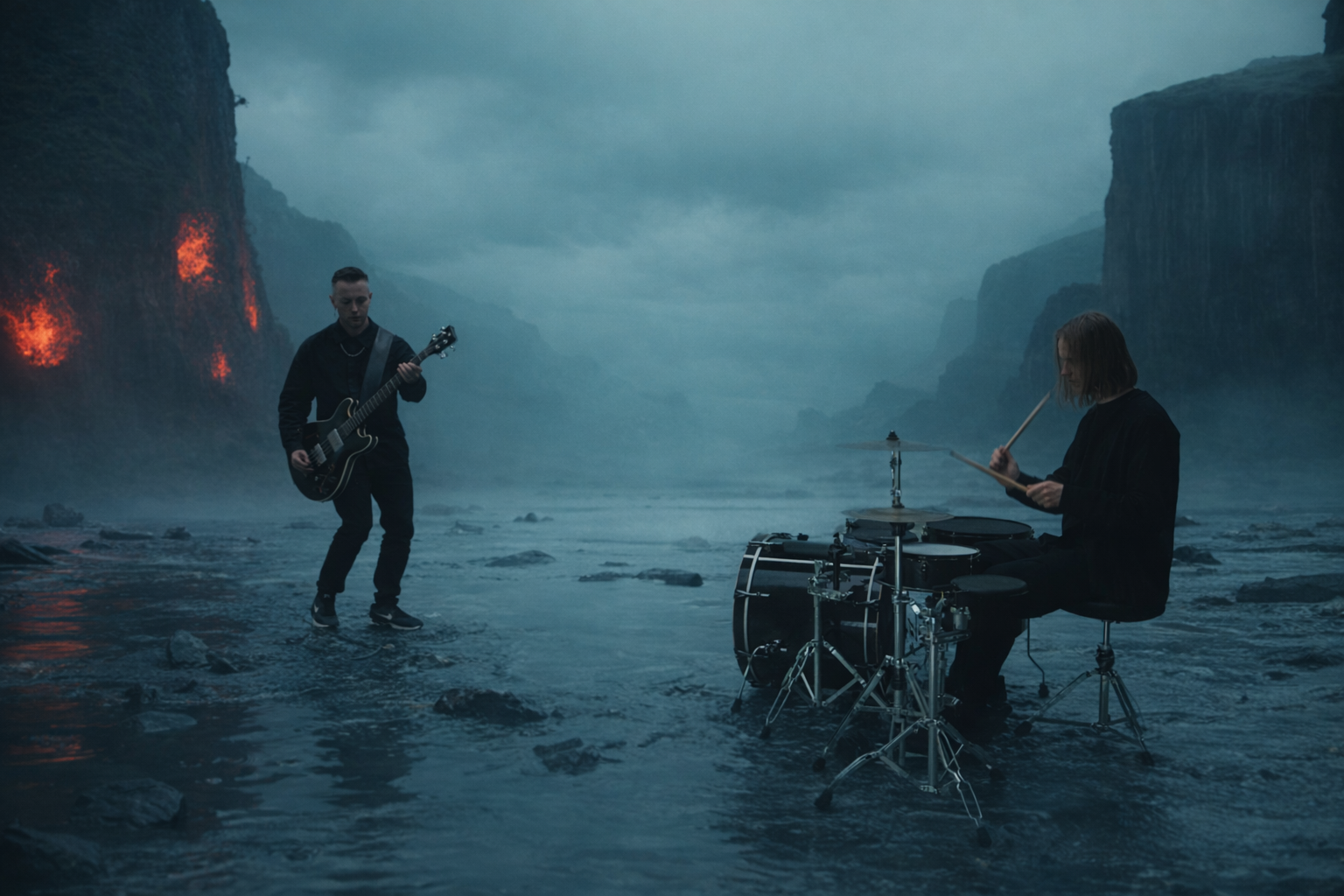
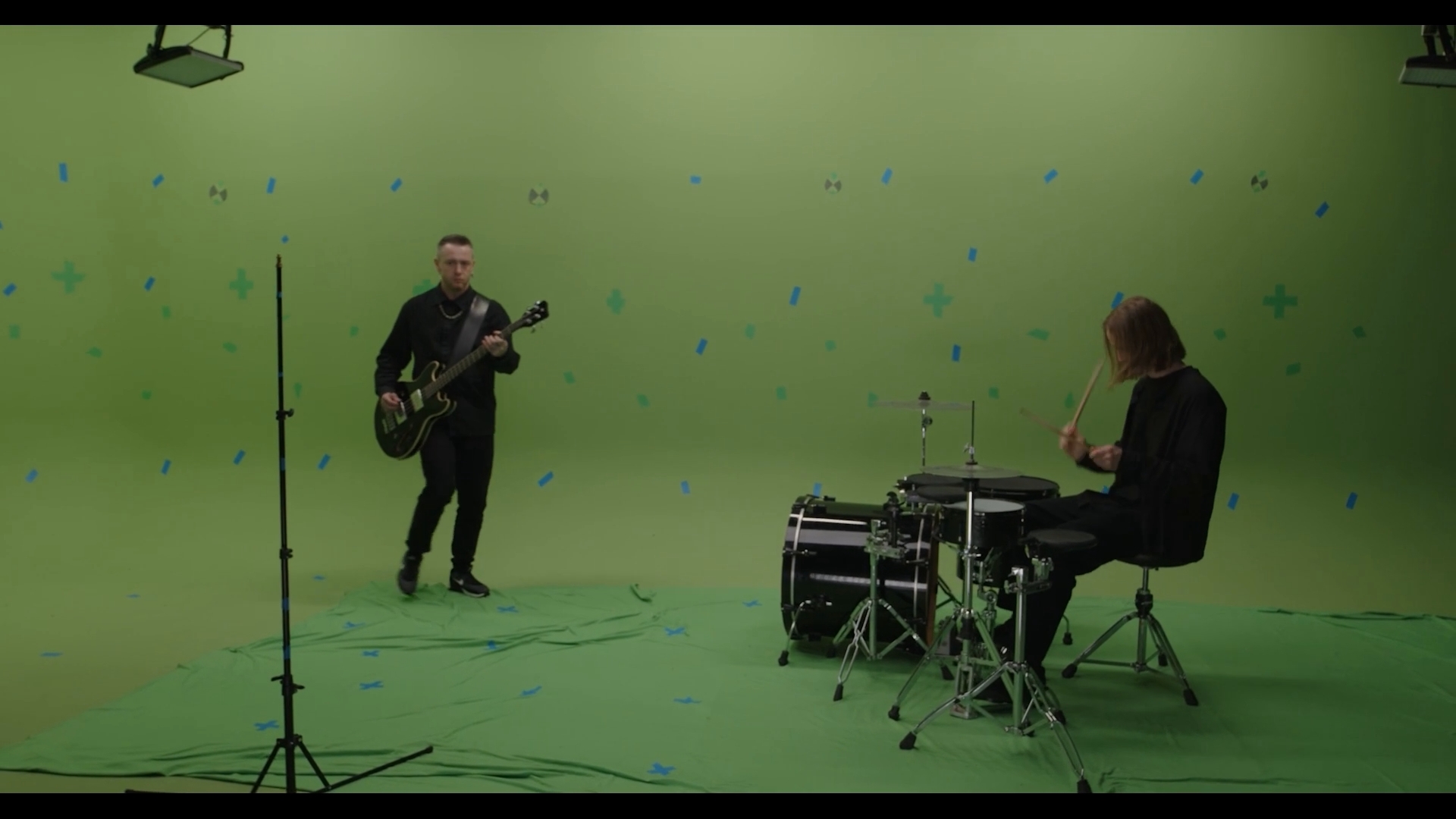
Glisser le rideau pour passer du tournage au décor.
03 / Rédaction du prompt
Rédaction des intentions
de réalisation.
Les intentions de réalisation, interactions physiques, indications de lumière, texture d’image, indications météorologiques… sont données en langage simple à un agent IA spécialisé et entraîné afin d’être traduites en langage structuré très détaillé : le prompt destiné à l’IA qui réalisera le rendu vidéo final.
TASK — LIVE-ACTION PERFORMANCE INTEGRATION
Create one continuous photorealistic shot using the supplied live-action video as the performance and timing reference, and the supplied composite still as the visual reference for the environment, framing, lighting and overall atmosphere. Match the source duration and deliver a horizontal 16:9 shot. No cuts, no montage, no added camera move.

REFERENCE ROLES
• Live-action video: source of the two musicians’ identities, body motion, playing gestures, performance rhythm, relative positions and observed camera motion.
• Composite still: visual target for the dark rocky valley, wet ground, shallow water, distant cliffs, blue-grey mist and restrained orange glow on the left cliff.
Use each reference only for its assigned role. The still must not freeze the performance.

PERFORMANCE AND CAMERA
Keep the guitarist on the left and the seated drummer on the right. Preserve their black clothing, facial features, hairstyles, body proportions, guitar, drumsticks, cymbals and drum kit. Follow the actual sequence of steps, strumming and drum strikes visible in the source. Maintain hand-to-instrument contact and the timing of each gesture. Reproduce only the camera movement present in the video; if the camera is stationary, keep it stationary. Maintain coherent perspective, stable scale and consistent spatial relationships throughout.

ENVIRONMENT AND PHYSICAL CONTACT
Replace the studio background, green floor, tracking markers, lighting fixtures and unused foreground stand with the referenced landscape. Place both musicians and the drum kit naturally on the same ground plane. Keep the drummer’s stool, drum legs and stands firmly supported; prevent floating, sliding or sinking.
Where a shoe contacts shallow water, create a small local splash and expanding ripples, triggered by the footfall. The splash must originate at the actual contact point and move consistently with the step. Do not add splashes beneath stationary objects. Let subtle water motion pass around the fixed drum stands. Match reflections and contact shadows to the wet surfaces and the overcast light.

ATMOSPHERE, LIGHT AND TEXTURE
Maintain soft cool daylight filtered through dense clouds, deep blue-grey shadows, subdued highlights and gentle atmospheric depth. Keep the orange cliff glow restrained and spatially stable. Introduce slow, subtle movement in distant mist and cloud layers, without obscuring the faces or instruments. Use restrained wind response only where plausible. Keep weather consistent across frames; no sudden storm, excessive rain or new volcanic eruption. Preserve natural skin and fabric texture, fine photographic grain and realistic motion blur.

TEMPORAL CONTINUITY
Keep faces, fingers, strings, drumsticks, cymbals, clothing and instrument geometry consistent from frame to frame. Avoid duplicated limbs, extra musicians, warped instruments, unstable edges, flickering textures, background drift and abrupt lighting changes. Do not redesign the setting or add text, logos or unrelated props.

OUTPUT
Silent video, source duration, horizontal 16:9. The result should feel like a single live-action performance photographed inside the referenced environment, with restrained and believable interactions.
04 / Lancement du rendu dans l’IA de génération vidéo
Compositing final
& Génération vidéo
Le prompt rédigé par l’agent IA spécialisé est copié et collé dans l’interface de l’agrégateur qui donne accès à l’IA spécialisée, choisie pour calculer le rendu final de la vidéo.
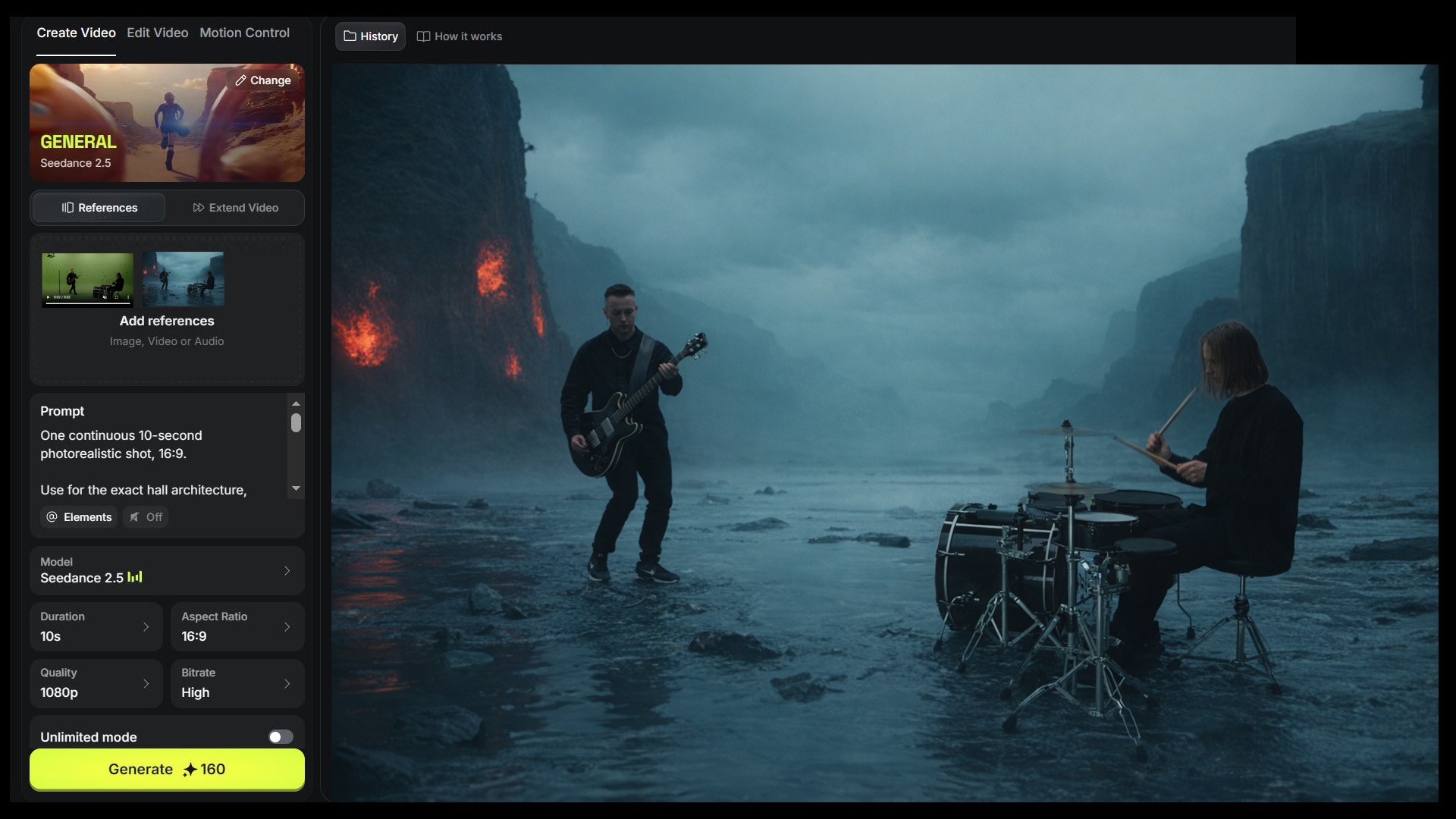
Interface de lancement — illustration du procédé.
05 / Montage final des séquences
Montage et étalonnage
des séquences.
L’ensemble des plans du clip sont montés dans notre logiciel de montage, les VFX et transitions ajoutés. Le son est monté et mixé avec le logiciel Pro Tools, puis l’étalonnage final est réalisé avec le logiciel DaVinci Resolve avant l’export des masters et des déclinaisons.
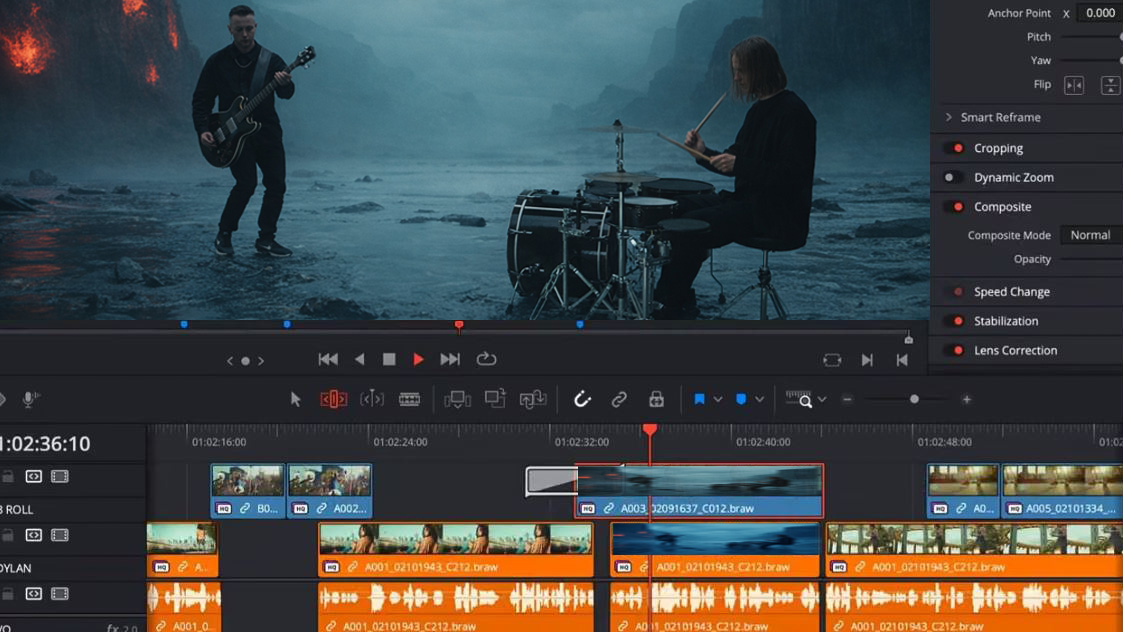
L’IA propose plus que du simple compositing !
Une interaction physique entre le réel et le virtuel.
Le pied filmé devient la référence d’un contact avec l’eau. L’intégration va au-delà du changement de fond : elle génère une réaction du décor au mouvement, avec des éclaboussures et des ondulations.